One minute, your dog is racing through the house as if qualifying for the canine Olympics. The next, they are walking on three legs and giving you a look that clearly says, “Something has gone terribly wrong, and I expect room service.”
Seeing your dog limp can be worrying, especially when you do not know what caused it. Limping is not a disease by itself – it is a sign that something is affecting your dog’s paw, leg, joint, muscles, bones, or nervous system. The problem may be as simple as a tiny stone caught between the toes, or it may require prompt veterinary treatment.
Understanding the possible causes can help you respond appropriately. However, because dogs cannot point to the painful spot or explain what happened during their latest backyard adventure, a professional veterinary examination is often the safest way to identify the problem.
Why Do Dogs Limp?
Dogs limp when putting normal weight on a leg feels painful, uncomfortable, weak, or unstable. Some dogs refuse to place the affected paw on the ground, while others show only a slight change in their stride.
A limp may appear suddenly after running, jumping, slipping, or playing. This is known as acute limping. In other cases, it develops slowly over several weeks or months. Gradual limping is often associated with joint disease, age related changes, or a problem that has become progressively worse.
The severity of the limp does not always reveal the severity of the condition. A small object between the toes can cause dramatic hopping, while certain joint problems may produce only mild stiffness at first. Dogs are talented creatures – but providing an accurate medical history is not one of their strongest skills.
Common Reasons Your Dog May Be Limping
There are many possible explanations for a dog’s limp. Some are minor and temporary, while others need diagnostic testing and targeted treatment.
- Something stuck in the paw – Small stones, plant material, ice, glass, or other debris can become trapped between the toes or embedded in a paw pad.
- A damaged nail – A cracked, torn, or partially detached nail can be extremely painful. The nail may also bleed or become infected.
- A cut or injured paw pad – Sharp objects, rough ground, hot surfaces, chemicals, and winter salt can damage the sensitive tissue of the paw.
- A strain or sprain – Running, jumping, twisting, or slipping can injure muscles, tendons, and ligaments. Even an enthusiastic leap from the sofa can end less heroically than planned.
- A joint injury – Damage to the knee, hip, shoulder, elbow, wrist, or ankle may cause pain, swelling, weakness, or instability.
- A fracture or dislocation – Falls, collisions, vehicle accidents, and other trauma can cause broken bones or displaced joints.
- Arthritis – Joint inflammation and degeneration commonly affect older dogs, although younger dogs can also develop joint disease. The limp may be more noticeable after resting or strenuous activity.
- Infection, inflammation, or another medical condition – Infections, developmental disorders, spinal problems, nerve conditions, and certain bone diseases may also affect the way a dog walks.
Age, breed, weight, activity level, previous injuries, and general health can all influence the likelihood of particular conditions. Large dogs may be more vulnerable to certain joint problems, while active dogs are naturally more likely to experience strains and paw injuries.
Puppies also deserve special attention. Because their bones and joints are still developing, limping in a growing dog should not automatically be dismissed as a minor playground injury.
What Can You Safely Check at Home?
Begin by observing your dog without forcing them to walk. Try to identify which leg is affected and whether your dog can place any weight on it. Notice when the limp began, whether it is getting worse, and whether it appears only after exercise or after getting up from rest.
When your dog is calm, you can gently inspect the paw. Look between the toes, examine the pads, and check the nails for cracks or bleeding. Watch for swelling, heat, redness, wounds, or foreign objects.
Use caution while touching a painful dog. Even the friendliest pet may react defensively when frightened or uncomfortable. If your dog resists, growls, cries, or tries to pull away, stop the examination. Do not repeatedly bend the joints or squeeze the leg in an attempt to locate the problem.
Until you receive veterinary guidance, restrict vigorous activity. Keep walks short and controlled, prevent running and jumping, and avoid stairs when possible. A dog who suddenly feels better may attempt an immediate return to professional squirrel chasing, so rest may require some supervision.
When Is Limping an Emergency?
A mild limp that quickly improves may not always require emergency treatment. However, sudden or severe lameness can indicate a serious injury. Contact a veterinary clinic promptly when you are uncertain, particularly if the limp follows trauma.
Seek urgent veterinary care when:
- Your dog cannot stand, walk, or place any weight on the affected leg
- The leg appears bent, unstable, or positioned at an unusual angle
- There is significant swelling, an open wound, or uncontrolled bleeding
- Your dog was struck by a vehicle, fell from a height, or experienced another major accident
- Your dog is crying, shaking, panting heavily, hiding, or showing obvious signs of severe pain
- The paw or limb feels unusually cold or looks pale, blue, or severely discoloured
- Limping is accompanied by weakness, collapse, breathing difficulty, vomiting, fever, or extreme tiredness
- Your dog is dragging a leg or appears unable to control it normally
Even when there are no obvious emergency signs, arrange an examination if the limp persists, repeatedly returns, becomes more noticeable, or affects your dog’s normal activities.
What Will the Veterinarian Look For?
A veterinary appointment usually begins with questions about when the limping started, whether there was an accident, and how the symptoms have changed. Details about your dog’s age, activity level, medications, previous injuries, and general health can help narrow down the possibilities.
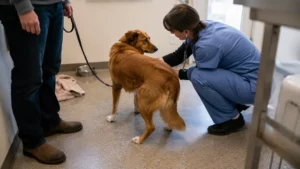
The veterinarian may observe your dog standing, walking, turning, sitting, and getting up. This allows the veterinary team to assess weight distribution, stride length, stiffness, balance, and joint movement.
The physical examination may include checking the paws, nails, muscles, bones, joints, spine, and nervous system. The veterinarian will look for swelling, tenderness, instability, reduced range of motion, muscle loss, wounds, and other abnormalities.
Sometimes a dog walks normally during the appointment despite limping dramatically at home. Apparently, veterinary clinics have mysterious healing powers – or dogs are simply committed to making their owners look confused. Recording a short video of the limp before the visit can provide useful information.
Depending on the findings, diagnostic testing may be recommended. X rays can help identify fractures, arthritis, bone changes, and some joint problems. Blood tests, ultrasound, fluid analysis, or additional imaging may be needed when infection, inflammation, or another medical condition is suspected.
Why Home Treatment Can Be Risky
It may be tempting to treat the limp with medication from your own medicine cabinet. However, human pain relievers can be dangerous for dogs. Products containing ibuprofen, naproxen, acetaminophen, or aspirin should not be given unless a veterinarian has specifically instructed you to use them.
The wrong medication or dose may cause stomach ulcers, internal bleeding, kidney damage, liver problems, or other serious complications. Medication can also temporarily hide pain, allowing a dog to continue using an injured limb and potentially make the condition worse.
Homemade splints and tight bandages can also create problems. If applied incorrectly, they may restrict circulation, increase swelling, damage the skin, or place the leg in an unsafe position.
Safe first steps usually involve limiting movement, preventing licking, and contacting a veterinary professional for guidance. The goal is not simply to stop the limp – it is to identify and treat the reason behind it.
How Is Limping Treated?
Treatment depends entirely on the cause. A small object in the paw may only require careful removal and treatment of the damaged tissue. A torn nail may need trimming, cleaning, pain control, and medication if infection is present.
Minor strains can improve with controlled rest and veterinarian prescribed pain relief. Joint injuries may require a longer recovery plan, rehabilitation exercises, weight management, or surgery. Arthritis is often managed through a combination of appropriate medication, nutrition, activity adjustments, and ongoing monitoring.
More serious injuries, including fractures and unstable joints, may need immobilization or surgical treatment. Infections require appropriate medication, while neurological conditions may involve additional diagnostic testing and specialized care.
Following the recommended recovery plan is important even when your dog appears to feel better. Dogs do not understand concepts such as “gradual return to activity.” In their minds, feeling 15 percent better may justify running at 100 percent speed.
Can You Help Prevent Future Limping?
Not every injury is preventable, especially when your dog believes that furniture is part of an indoor obstacle course. Still, several practical habits can help protect their paws, muscles, and joints.
Keep your dog at a healthy weight to reduce unnecessary pressure on the joints. Trim the nails regularly, check the paws after outdoor adventures, and use caution on icy, hot, or rough surfaces.
Exercise should match your dog’s age, breed, fitness level, and health. Sudden bursts of intense activity can place stress on muscles and joints, particularly in dogs that spend most of the week relaxing indoors. Consistent, controlled exercise is generally safer than an occasional marathon game of fetch.
Regular wellness examinations can also help detect joint discomfort, reduced mobility, and other health changes before they significantly affect your dog’s quality of life.
Help Your Dog Get Back on All Four Paws
A limp is your dog’s way of showing that something does not feel right. While the cause may be minor, waiting too long can allow pain, inflammation, or an injury to become more difficult to treat.
For pet owners looking for dependable Airdrie veterinary support, Thrive Vet Care provides professional examinations, diagnostic services, pain management, radiology, surgery, and personalized treatment plans. The veterinary team can determine why your dog is limping and recommend the appropriate next steps for a safe and comfortable recovery.
Do not let your dog’s mysterious three legged performance become a recurring show.
Contact Thrive Vet Care today to book an examination and help your companion return to comfortable walks, happy playtime, and enthusiastic tail wagging.