Dogs are talented at many things – finding the muddiest section of a clean park, hearing a cheese wrapper from three rooms away and looking completely innocent beside an overturned garbage bin. Unfortunately, deciding which human foods are safe to eat is not usually one of their strengths.
If your dog ate a small piece of onion, your first reaction may be to panic. The good news is that a tiny amount does not automatically mean your dog will become seriously ill. However, onions are toxic to dogs, and the level of risk depends on the amount eaten, the dog’s size, the type of onion and whether the exposure happened only once or repeatedly.
The safest approach is to remove the food, collect the relevant details and speak with a veterinary professional. Guessing is rarely helpful when toxic foods are involved, especially because symptoms may not appear immediately.
Why Are Onions Toxic to Dogs?
Onions belong to the Allium family, along with garlic, chives, leeks and shallots. These plants contain compounds that can damage a dog’s red blood cells.
Red blood cells are responsible for carrying oxygen throughout the body. When they become damaged, the dog may develop hemolytic anemia, a condition in which red blood cells are destroyed faster than the body can replace them.
This means onion toxicity is not simply a matter of an upset stomach. In more serious cases, it can affect the blood’s ability to transport oxygen properly.
Raw, cooked, fried, dehydrated and powdered onions can all be harmful. Cooking an onion may make it tastier to humans, but it does not reliably make it safe for dogs. Onion powder can be especially concerning because it is concentrated and may be hidden in sauces, soups, seasoning mixes, gravies, processed meats and prepared meals.
Is a Tiny Piece of Onion Dangerous?
The risk depends heavily on the size of the dog and the amount consumed. A small fragment eaten by a large dog is generally less concerning than the same fragment eaten by a very small dog or puppy.
However, the phrase “small piece” is not very precise. One person may mean a tiny piece that fell from a cutting board, while another may mean a quarter of an onion ring. Dogs are not known for providing reliable witness statements, so estimating the missing amount can be difficult.
Certain dogs may also be more sensitive than others. Breed, age, existing health conditions and repeated exposure can all affect the level of concern.
A one-time tiny exposure may only require observation after a veterinary assessment. A larger amount, an unknown amount or exposure to concentrated onion powder may require more immediate attention.
What Should You Do First?
Stay calm and remove any remaining onion or onion-containing food. Prevent your dog from returning for a second serving, even if the first serving appeared to receive excellent reviews.
Check what your dog ate and gather as much information as possible. If the onion was part of a packaged food, sauce or prepared meal, keep the label or take a photograph of the ingredients.
Useful information includes:
- Your dog’s weight, age and breed
- The estimated amount of onion eaten
- Whether the onion was raw, cooked, dried or powdered
- The approximate time of ingestion
- Any symptoms your dog is showing
- Other ingredients in the food
- Existing medical conditions or current medications
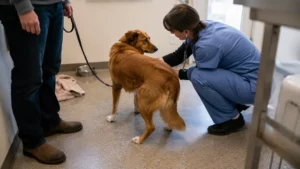
Contact your veterinary clinic and explain the situation. A team of experienced Airdrie veterinarians can assess the likely dose and tell you whether monitoring at home is appropriate or whether your dog should be examined.
Calling early does not necessarily mean your dog will need treatment. In many cases, a professional assessment can confirm that the exposure is low risk and provide clear monitoring instructions.
Should You Make Your Dog Vomit?
Do not attempt to make your dog vomit unless a veterinarian specifically tells you to do so.
Hydrogen peroxide is often recommended in online discussions, but it can cause complications when used incorrectly. It may irritate the stomach, cause prolonged vomiting or enter the lungs if the dog aspirates.
Inducing vomiting is also not suitable for every dog. It may be dangerous for dogs with breathing problems, swallowing difficulties, certain medical conditions or reduced alertness.
Veterinary professionals consider several factors before deciding whether vomiting should be induced, including how recently the food was eaten, the dog’s condition and the substance involved.
Home remedies such as milk, oil, bread, charcoal products or large meals should also be avoided unless recommended by a veterinary professional. These treatments do not neutralize onion toxins and may make the situation harder to assess.
What Symptoms Can Onion Cause?
Some dogs may develop digestive symptoms soon after eating onion. Others may appear completely normal at first.
Possible early symptoms include vomiting, diarrhea, drooling, nausea, abdominal discomfort and reduced appetite.
More serious signs may develop if red blood cells become damaged. Watch for:
- Weakness or unusual tiredness
- Pale, yellow or unusually dark gums
- Rapid breathing or panting at rest
- Increased heart rate
- Dark, reddish or brown urine
- Reduced interest in walking or playing
- Collapse or difficulty standing
Symptoms related to anemia may take several days to become noticeable. This delayed reaction is one reason why a dog looking normal immediately after eating onion does not always mean the risk has passed.
Dogs are also very good at hiding discomfort. Some will continue asking for treats while quietly feeling unwell, which is admirable dedication but not particularly useful for diagnosis.
When Is It an Emergency?
Some situations require urgent veterinary attention rather than routine home observation.
Contact an emergency vet in Airdrie promptly if your dog is weak, vomiting repeatedly, breathing rapidly, has pale gums, has dark urine or is struggling to stand.
Urgent help may also be appropriate when the amount eaten is unknown, your dog is very small or the food contained onion powder, garlic or several toxic ingredients.
Prepared meals can be especially difficult to assess. A meat dish may contain onion powder, garlic seasoning, heavy fat, excessive salt or other ingredients that add additional risks.
It is always better to call and learn that the exposure is unlikely to cause harm than to wait until obvious symptoms develop.
What Will the Veterinarian Do?
The veterinarian will first estimate the level of exposure based on the dog’s weight, the amount eaten, the form of onion and the time that has passed.
If the onion was eaten recently, the veterinary team may recommend professional decontamination. This may include inducing vomiting in a controlled environment when it is safe to do so.
Blood tests may be recommended when there is concern about red blood cell damage. These tests can help identify anemia and changes in the blood associated with oxidative injury.
Because symptoms may be delayed, repeat blood testing may sometimes be advised. A normal test shortly after ingestion does not always rule out changes that could develop later.
Treatment for more significant onion toxicity may include intravenous fluids, medication for nausea, oxygen support and close monitoring. In severe cases, a blood transfusion may be needed, although this would be unusual after a genuinely tiny, isolated piece.
Can You Monitor Your Dog at Home?
Home monitoring may be reasonable when a veterinarian determines that the amount consumed was minimal and the dog is unlikely to develop toxicity.
Follow the clinic’s instructions regarding how long to monitor your dog. Pay attention to energy levels, appetite, breathing, gum colour, urine colour and general behaviour.
Make sure your dog has access to fresh water. Avoid giving unusual foods, supplements or home treatments unless they have been approved by the clinic.
Contact the veterinary team again if symptoms appear, if your dog’s behaviour changes or if you discover that more onion was eaten than originally believed.
For example, finding one missing onion piece is one situation. Finding an empty container of onion dip behind the sofa is an entirely different investigation.
How Can You Prevent Onion Exposure?
Onion exposure often happens when food falls during cooking, plates are left unattended or garbage bins are easily accessible.
Keep onions and related foods away from the edge of counters. Store seasoning containers in closed cupboards and use a secure lid on garbage and compost bins.
Pay close attention to foods that may contain hidden onion, such as soups, gravy, burgers, stuffing, sauces, broth, pizza toppings and seasoned meat.
It is also helpful to establish a household rule that dogs should not receive table scraps unless every ingredient is known to be safe.
Visitors and children may need reminders. A dog sitting politely and staring into someone’s soul can be extremely persuasive, but emotional manipulation does not make onion safe.
The Bottom Line
If your dog ate a small piece of onion, remove the remaining food, determine what was eaten and contact a veterinary professional.
A tiny amount may not result in serious illness, especially in a large, healthy dog. However, onions are toxic, concentrated forms can be more dangerous and symptoms may be delayed.
Do not induce vomiting or use home remedies without professional guidance. Veterinary advice can help you avoid unnecessary treatment in a low-risk situation while ensuring that a more serious exposure is managed quickly.
Your dog may believe that every object on the kitchen floor is a complimentary snack. Your job is to provide slightly better judgment – and to call the professionals when that judgment arrives a few seconds too late.